
Duas While Bowing in Ruku: Five Authentic Variants
بِسْمِ اللَّهِ الرَّحْمَٰنِ الرَّحِيمِ
Ruku — the bowing position of prayer — carries its own dedicated glorifications in the Sunnah, distinct from those said in sujood, standing, or sitting. Five authentic narrations are recorded for this position, ranging from the short, obligatory-level tasbih every praying Muslim learns first, to longer, more elaborate declarations the Prophet ﷺ is reported to have used on other occasions.
1. Wajib Dua in Ruku (Said Three Times)

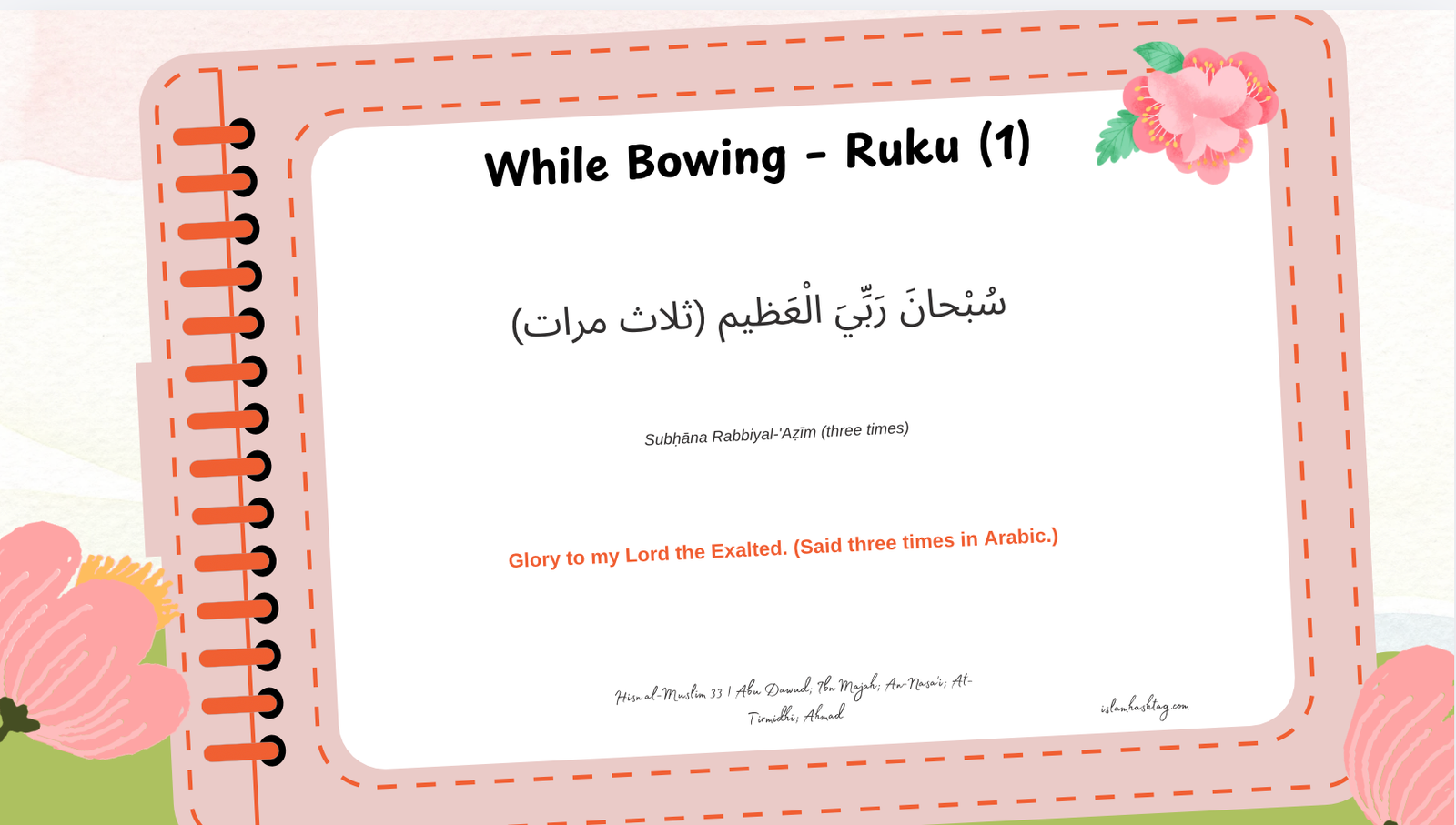
Arabic: سُبْحانَ رَبِّيَ الْعَظيم (ثلاث مرات)
Transliteration: Subḥāna Rabbiyal-‘Aẓīm (three times)
Translation: “Glory to my Lord the Exalted.”
Reference: Hisn al-Muslim 33; Sunan Abu Dawud; Sunan Ibn Majah; Sunan an-Nasa’i; Jami’ at-Tirmidhi; Musnad Ahmad.
This is the tasbih taught to every Muslim from childhood, and the majority of the four Sunni madhabs consider it obligatory (wajib)
2. The Prophet’s ﷺ Most Frequent dua in nafil salahs
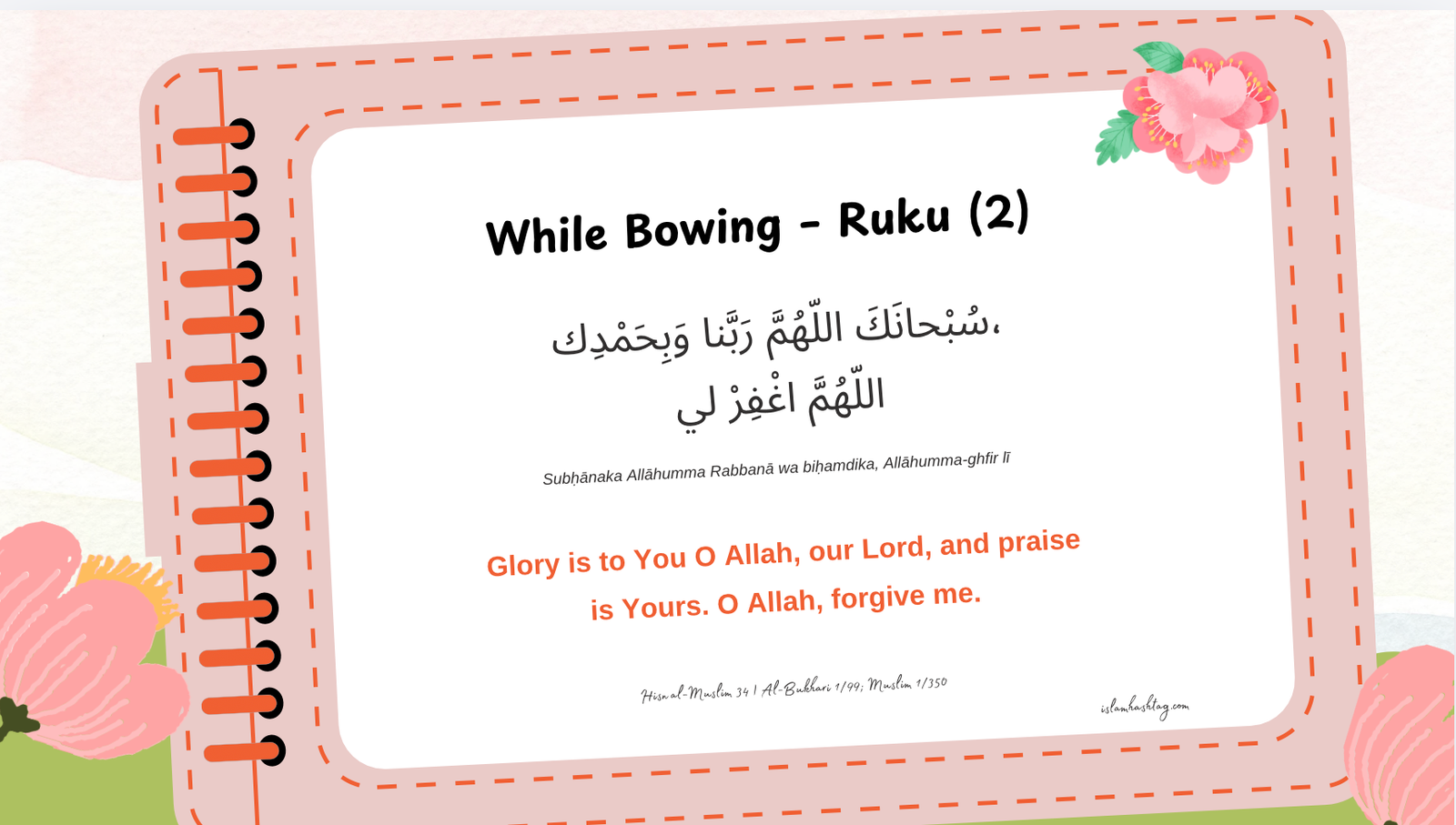
Arabic: سُبْحانَكَ اللّهُمَّ رَبَّنا وَبِحَمْدِك، اللّهُمَّ اغْفِرْ لي
Transliteration: Subḥānaka Allāhumma Rabbanā wa biḥamdika, Allāhumma-ghfir lī
Translation: “Glory is to You O Allah, our Lord, and praise is Yours. O Allah, forgive me.”
Reference: Hisn al-Muslim 34; Sahih al-Bukhari 1/99; Sahih Muslim 1/350.
Recorded in both Sahih al-Bukhari and Sahih Muslim, A’ishah (RA) reported that the Prophet ﷺ recited this often in his ruku and sujood in the final period of his life, connecting it to the Qur’anic instruction in Surah An-Nasr (110:3) to glorify and seek forgiveness — commentators note this dua was adopted by the Prophet ﷺ after that surah’s revelation.
3. Dua in ruku
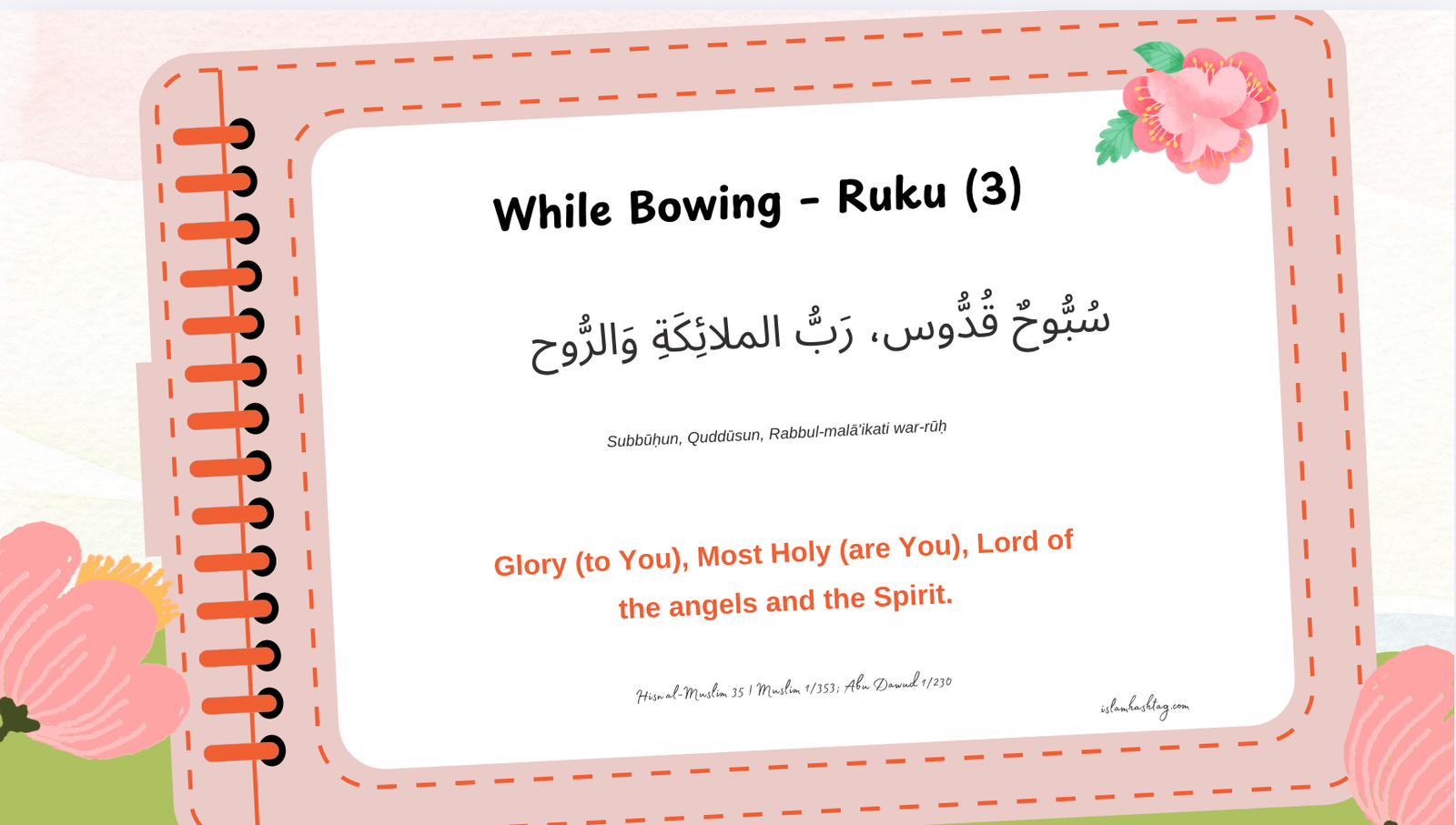
Arabic: سُبُّوحٌ قُدُّوس، رَبُّ الملائِكَةِ وَالرُّوح
Transliteration: Subbūḥun, Quddūsun, Rabbul-malā’ikati war-rūḥ
Translation: “Glory (to You), Most Holy (are You), Lord of the angels and the Spirit.”
Reference: Hisn al-Muslim 35; Sahih Muslim 1/353; Sunan Abu Dawud 1/230.
4. Dua in Ruku-Allāhumma laka raka’tu,
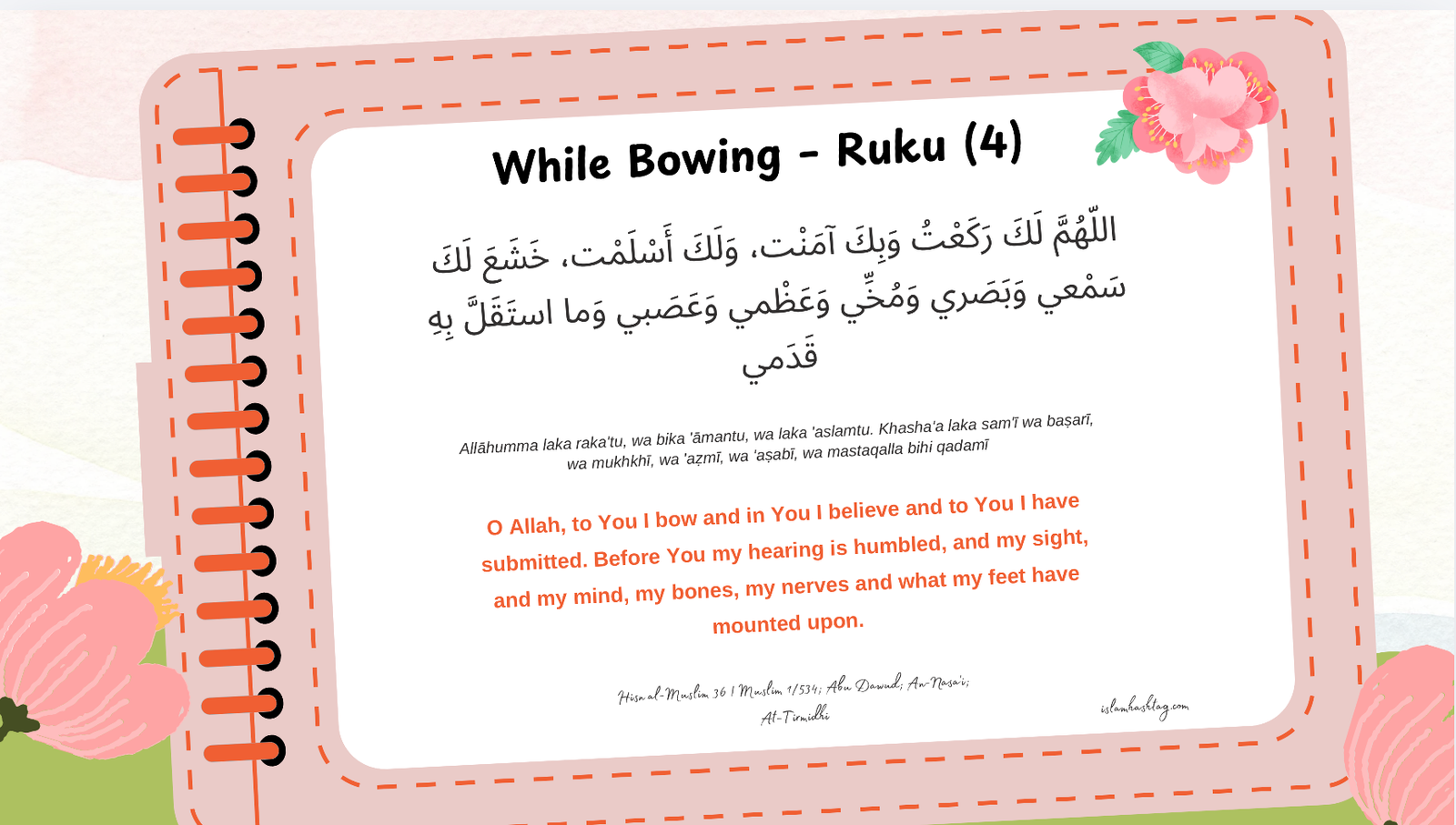
Arabic: اللّهُمَّ لَكَ رَكَعْتُ وَبِكَ آمَنْت، وَلَكَ أَسْلَمْت…
Transliteration: Allāhumma laka raka’tu, wa bika ‘āmantu, wa laka ‘aslamtu. Khasha’a laka sam’ī wa baṣarī, wa mukhkhī, wa ‘aẓmī, wa ‘aṣabī, wa mastaqalla bihi qadamī
Translation: “O Allah, to You I bow and in You I believe and to You I have submitted. Before You my hearing is humbled, and my sight, and my mind, my bones, my nerves and what my feet have mounted upon.”
Reference: Hisn al-Muslim 36; Sahih Muslim 1/534; Sunan Abu Dawud; Sunan an-Nasa’i; Jami’ at-Tirmidhi.
5. Another sunnah dua
Arabic: سُبْحانَ ذِي الْجَبَروتِ والمَلَكوتِ وَالكِبْرِياءِ وَالعَظَمَةِ
Transliteration: Subḥāna dhil-jabarūti, walmalakūti, walkibriyā’i, wal-‘aẓamati
Translation: “Glory is to You, Master of power, of dominion, of majesty and greatness.”
Reference: Hisn al-Muslim 37; Sunan Abu Dawud 1/230; Sunan an-Nasa’i; Musnad Ahmad.
This dua comprises four distinct divine attributes — jabarut (power), malakut (dominion), kibriya’ (majesty), and ‘azamah (greatness) — a formula scholars note was reported alongside the third variant above from the same narration, suggesting the Prophet ﷺ combined them on at least one occasion.
References cited: Hisn al-Muslim 33-37; Sahih al-Bukhari 1/99; Sahih Muslim 1/350, 1/353, 1/534; Sunan Abu Dawud 1/230; Sunan Ibn Majah; Sunan an-Nasa’i; Jami’ at-Tirmidhi; Musnad Ahmad.
📌 You might also like:
– The Six Opening Duas of Prayer (Du’a al-Istiftah)
– How to Respond to the Athan
– Duas for Wudu