
Dua for New Clothes
بِسْمِ اللَّهِ الرَّحْمَٰنِ الرَّحِيمِ
Clothing occupies more space in the Sunnah than most people expect. The Prophet ﷺ did not only teach a dua for putting on a garment and for putting on something new — he also taught the believers what to say to someone else wearing something new, and what to say before removing clothing altogether. Together these three narrations round out a complete Islamic etiquette (adab) of dress, covering not just the private moment of getting dressed but the social courtesy of complimenting others and the private discipline of undressing with the remembrance of Allah ﷻ.
Congratulating Someone on New Clothes
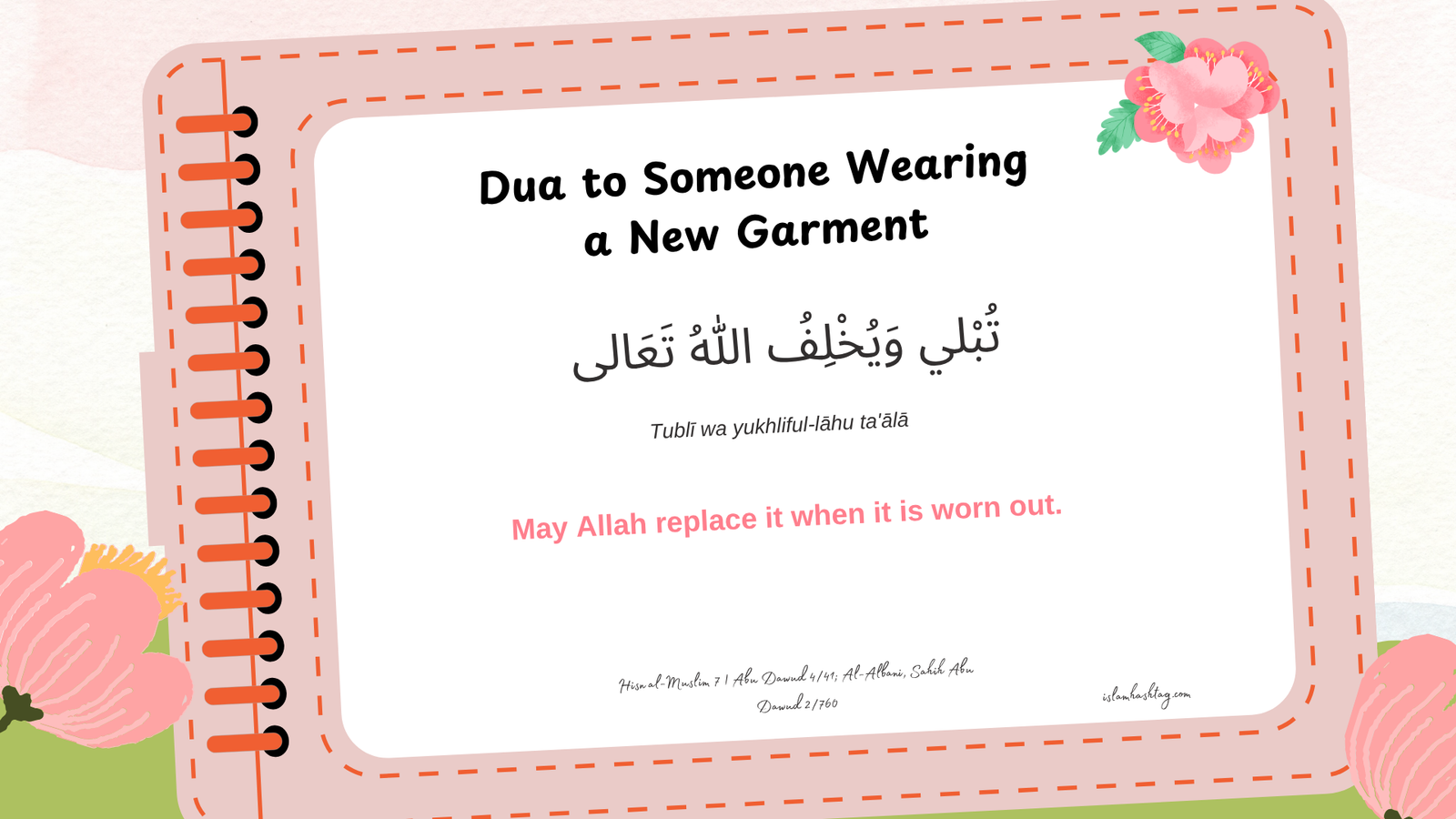
Unlike most adhkar, which are said for oneself, these next two narrations are addressed to another person — making them a rare category of “social dua,” said on someone else’s behalf when you notice they are wearing something new.
“May Allah Replace It When It Is Worn Out”
Arabic: تُبْلي وَيُخْلِفُ اللهُ تَعَالى
Transliteration: Tublī wa yukhliful-lāhu ta’ālā
Translation: “May Allah replace it when it is worn out.”
Reference: Hisn al-Muslim 7; Sunan Abu Dawud 4/41; graded authentic (sahih) by Shaykh Al-Albani, Sahih Abu Dawud 2/760.
This short line is essentially a dua of continuity — it does not simply praise the item, it asks Allah ﷻ that when this garment eventually wears out, He replace it with another. Said to a friend, sibling, or spouse wearing something new, it reframes what could be an empty compliment (“nice shirt”) into an actual supplication for their ongoing provision (rizq).
“Live Praiseworthy, Die a Martyr”
Arabic: اِلبَسْ جَديداً وَعِشْ حَميداً وَمُتْ شهيداً
Transliteration: Ilbas jadīdan, wa ‘ish ḥamīdan, wa mut shahīdan
Translation: “Put on new clothes, live a praise-worthy life and die as a martyr.”
Reference: Hisn al-Muslim 8; Sunan Ibn Majah 2/1178; Al-Baghawi 12/41; graded authentic by Al-Albani, Sahih Ibn Majah 2/275.
This second congratulatory formula is more expansive — it moves from the garment itself to the wearer’s entire life trajectory, asking that the life lived in this new clothing be a praiseworthy one (ḥamīdan) and that its end be the honoured death of a martyr (shahīdan). Some narrators report it being said specifically within close family, which is consistent with its warmth and scope; it is not a formula reserved for strangers, but one naturally suited to those closest to you.
Both narrations can be said interchangeably, or combined, when someone shows you a new piece of clothing. Neither is obligatory — this is a matter of Sunnah etiquette (adab), not a ruling of fiqh — but reviving it recovers a small, distinctly Prophetic way of noticing and blessing the people around you.
Before Undressing: The Shortest Dua in the Series
Arabic: بِسْمِ الله
Transliteration: Bismillāhi
Translation: “In the Name of Allah.”
Reference: Hisn al-Muslim 9; Jami’ at-Tirmidhi 2/505; graded authentic by Al-Albani, Sahihul-Jami’ 3/203.
At only two words, this is among the shortest of all authenticated adhkar — yet its scope is significant. Hadith commentators connect this instruction to the broader Prophetic teaching that saying Bismillah before undressing places a screen (sitr) between a person and the jinn who would otherwise witness their ‘awrah. This connects clothing back to the very first entries in this series: putting something on begins with gratitude (“Alḥamdu lillāh”), and taking it off begins with protection (“Bismillāh”) — the two ends of the same daily act bracketed by remembrance of Allah ﷻ.
Why This Matters
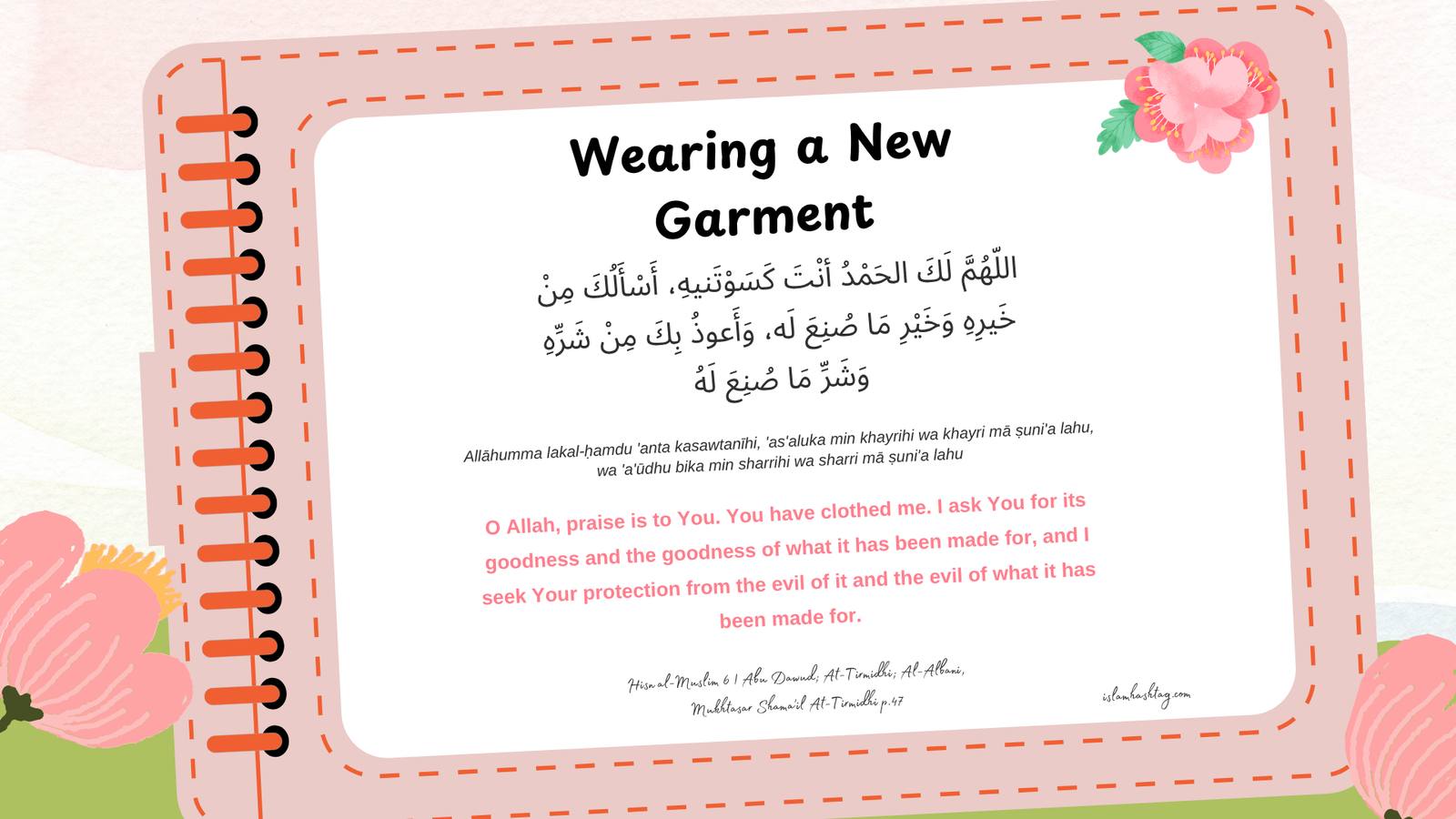
Taken together with the two duas already covered — putting on any garment (Hisn al-Muslim 5) and putting on something new (Hisn al-Muslim 6) — these five narrations form a complete clothing adab: what to say when dressing, what to say when dressed in something new, what to say to someone else in that position, and what to say before undressing. Few areas of daily life are documented this thoroughly in the Sunnah, which is itself a lesson: nothing in the believer’s day is too mundane for the remembrance of Allah ﷻ.
Reflection: These narrations remind us that Islamic spirituality is not confined to the mosque or to formal worship — it is woven into the smallest transitions of the day, including getting dressed and undressed. May Allah ﷻ make us of those who remember Him in ease as much as in hardship.
References cited: Hisn al-Muslim 7, 8, 9; Sunan Abu Dawud 4/41; Sunan Ibn Majah 2/1178; Jami’ at-Tirmidhi 2/505; Al-Albani, Sahih Abu Dawud, Sahih Ibn Majah, and Sahihul-Jami’.
📌 You might also like:
– Dua for Wearing a Garment
– Dua for Wearing a New Garment
– Dua on Waking Up