
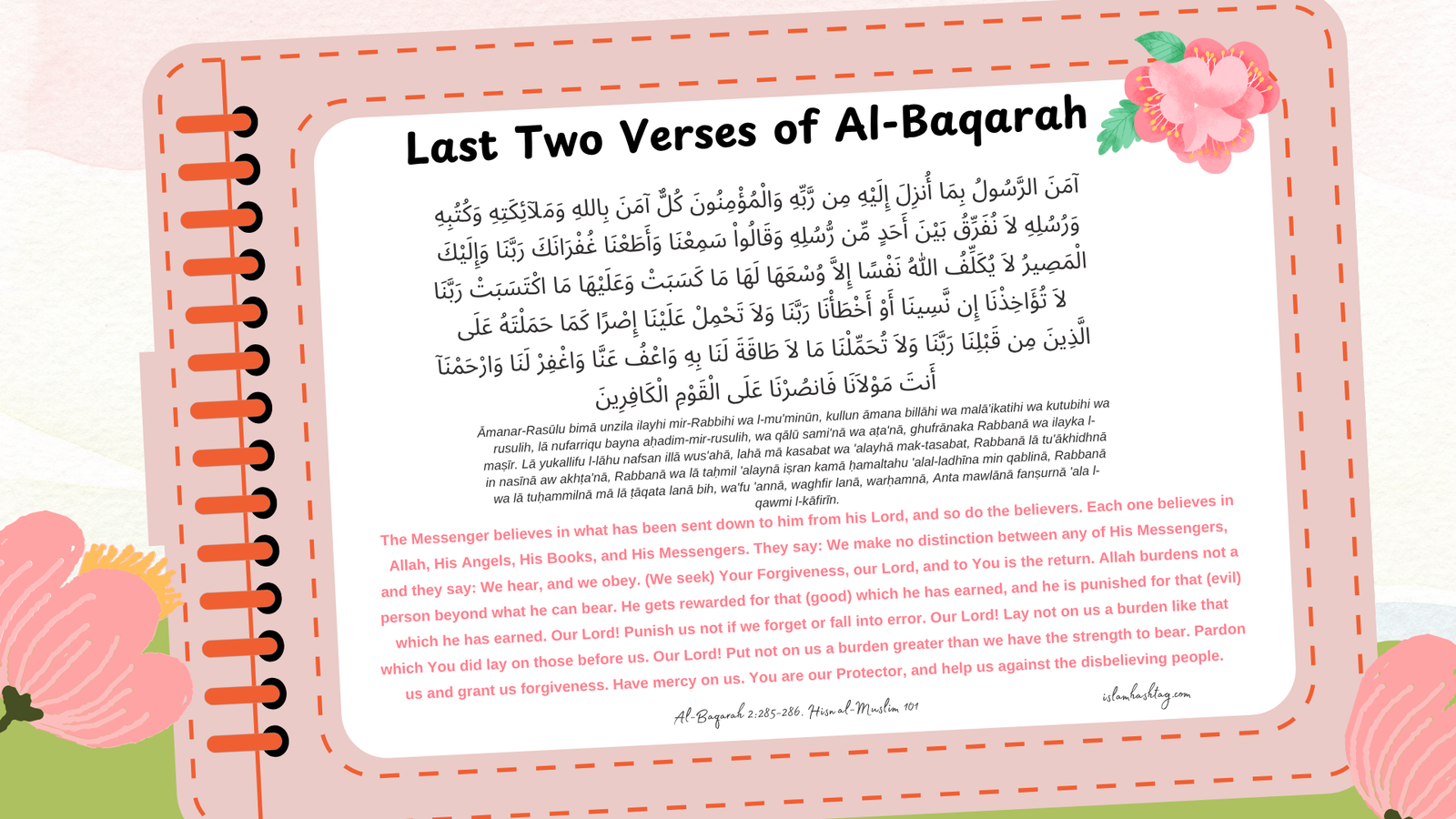
The last two verses of Surah Al-Baqarah (2:285-286) are among the most frequently recited portions of the Qur’an in daily Muslim life, and for good reason. The Prophet Muhammad ﷺ said that whoever recites them at night, they will be sufficient for him (Sahih al-Bukhari 4008, Sahih Muslim 807) — a hadith scholars understand to mean protection and spiritual sufficiency through the night.
Arabic:
آمَنَ الرَّسُولُ بِمَا أُنزِلَ إِلَيْهِ مِن رَّبِّهِ وَالْمُؤْمِنُونَ ۚ كُلٌّ آمَنَ بِاللَّهِ وَمَلَائِكَتِهِ وَكُتُبِهِ وَرُسُلِهِ ۚ لَا نُفَرِّقُ بَيْنَ أَحَدٍ مِّن رُّسُلِهِ ۚ وَقَالُوا سَمِعْنَا وَأَطَعْنَا ۖ غُفْرَانَكَ رَبَّنَا وَإِلَيْكَ الْمَصِيرُ ﴿٢٨٥﴾ لَا يُكَلِّفُ اللَّهُ نَفْسًا إِلَّا وُسْعَهَا ۚ لَهَا مَا كَسَبَتْ وَعَلَيْهَا مَا اكْتَسَبَتْ ۗ رَبَّنَا لَا تُؤَاخِذْنَا إِن نَّسِينَا أَوْ أَخْطَأْنَا ۚ رَبَّنَا وَلَا تَحْمِلْ عَلَيْنَا إِصْرًا كَمَا حَمَلْتَهُ عَلَى الَّذِينَ مِن قَبْلِنَا ۚ رَبَّنَا وَلَا تُحَمِّلْنَا مَا لَا طَاقَةَ لَنَا بِهِ ۖ وَاعْفُ عَنَّا وَاغْفِرْ لَنَا وَارْحَمْنَا ۚ أَنتَ مَوْلَانَا فَانصُرْنَا عَلَى الْقَوْمِ الْكَافِرِينَ ﴿٢٨٦﴾
Transliteration:
Āmanar-Rasūlu bimā unzila ilayhi mir-Rabbihi wa l-mu’minūn, kullun āmana billāhi wa malā’ikatihi wa kutubihi wa rusulih… (full verse continues) …Anta mawlānā fanṣurnā ‘ala l-qawmi l-kāfirīn.
Translation:
“The Messenger believes in what has been sent down to him from his Lord, and so do the believers… Our Lord! Punish us not if we forget or fall into error… You are our Protector, and help us against the disbelieving people.”
These two verses close Surah Al-Baqarah with a declaration of faith followed by five supplications — for forgiveness of forgetfulness and error, relief from unbearable burdens, and Allah’s ﷻ mercy and support. Classical exegetes such as Ibn Kathir note that these du’as were granted directly to the believers on the night of the Mi’raj, distinguishing them from ordinary Qur’anic supplication.
Reference:
Al-Baqarah 2:285-286; Hisn al-Muslim 101; Sahih al-Bukhari 4008; Sahih Muslim 807.
Reciting these verses before sleep is a confirmed Sunnah and is recommended alongside the other bedtime adhkar the Prophet ﷺ taught his companions, forming a complete and easily memorized nightly practice.